gbs
gbs March 5, 2024
 March 5, 2024
Diego Maradona
March 5, 2024
Diego Maradona

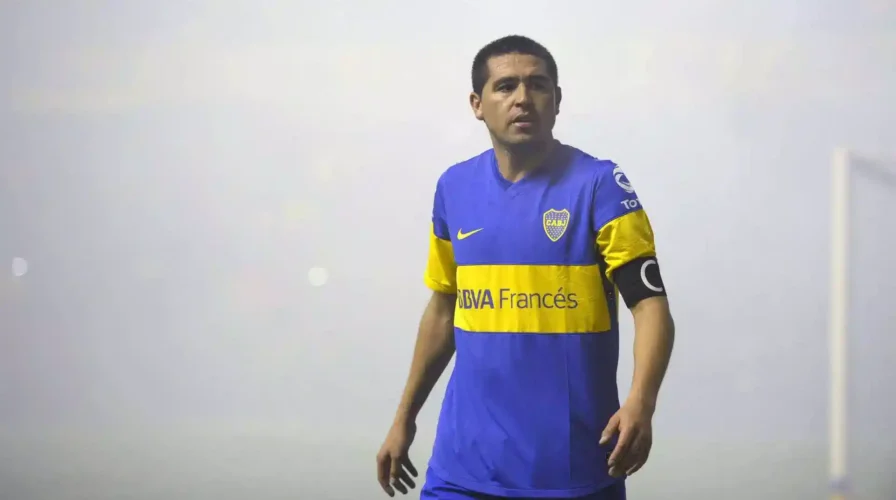
Juan Román Riquelme is an iconic former Argentine footballer, celebrated for his playmaking abilities, vision, and elegant style of play. Born on June 24, 1978, in San Fernando, Argentina, Riquelme played primarily as an attacking midfielder and is often regarded as one of the last traditional “number 10” playmakers in modern football.
Career Highlights
- Club Career:
- Argentinos Juniors (1995–1996): Riquelme began his professional career at Argentinos Juniors, where he quickly caught the attention of top Argentine clubs.
- Boca Juniors (1996–2002, 2007–2014): Riquelme became a star at Boca Juniors, winning several titles, including three Copa Libertadores championships (2000, 2001, and 2007) and Intercontinental Cup titles. He is revered at Boca, where he earned legendary status for his skill, leadership, and clutch performances.
- Barcelona (2002–2003): Riquelme moved to Europe to join Barcelona, but he struggled to fit into the system under manager Louis van Gaal, who did not fully utilize his playmaking talents.
- Villarreal (2003–2007): Riquelme found success at Villarreal, where he became the focal point of the team. He helped the club reach the UEFA Champions League semi-finals in 2006, a historic achievement for Villarreal, though he missed a crucial penalty that ultimately led to their exit against Arsenal.
- Return to Boca Juniors: After his time in Europe, Riquelme returned to Boca, where he continued to play and win titles, solidifying his legendary status among Boca fans until he retired from the club in 2014.
- International Career:
- Riquelme represented Argentina from 1997 to 2008, earning 51 caps and scoring 17 goals.
- He was pivotal in Argentina’s 2005 Confederations Cup campaign, where they reached the final, and he starred in the 2006 FIFA World Cup, showcasing his playmaking skills.
- He also led Argentina to victory in the 2008 Olympics, where he captained a team featuring Lionel Messi, securing a gold medal.
- In 2007, he played a key role in Argentina’s run to the Copa América final, although they lost to Brazil.
- Playing Style:
- Riquelme is best known for his exceptional vision, precise passing, and ability to control the tempo of the game, often referred to as an “enganche” (a traditional Argentine playmaker role).
- His style was calm and composed, with a focus on ball control, close dribbling, and intelligent play rather than speed.
- Riquelme had a unique ability to dictate play from midfield, often slowing down the game to find the best opportunities, earning him the title “El Último Diez” (“The Last Number 10”).
- Accolades:
- Riquelme won numerous domestic and international titles, especially with Boca Juniors, where he became an icon.
- He was named Argentine Footballer of the Year multiple times and was included in various South American Teams of the Year.
- In 2001, he was named the South American Footballer of the Year.
- Legacy and Impact
- Riquelme is widely regarded as one of Argentina’s greatest footballers and one of the best playmakers of his generation. His influence extends beyond his achievements; he is often cited as a purist’s player, symbolizing the artistry of South American football.
- Known for his loyalty, Riquelme turned down other lucrative offers in Europe to return to Boca Juniors, earning a special place in the hearts of Boca fans.
Post-Retirement and Role at Boca Juniors
- After retiring, Riquelme became involved in football administration and is currently the Vice President of Boca Juniors. His deep understanding of the game and commitment to Boca has driven his efforts to improve the club both on and off the pitch.
Legacy
Juan Román Riquelme is remembered not only for his immense skill and achievements but for his unique style and approach to football, which embraced creativity and elegance. He remains a beloved figure in Argentina and one of the most iconic midfielders of his era
 March 5, 2024
Diego Maradona
November 8, 2024
Franz Beckenbauer
March 5, 2024
Diego Maradona
November 8, 2024
Franz Beckenbauer

Popular Legends



Categories

Football live score and World Most Famous Players in Football History!